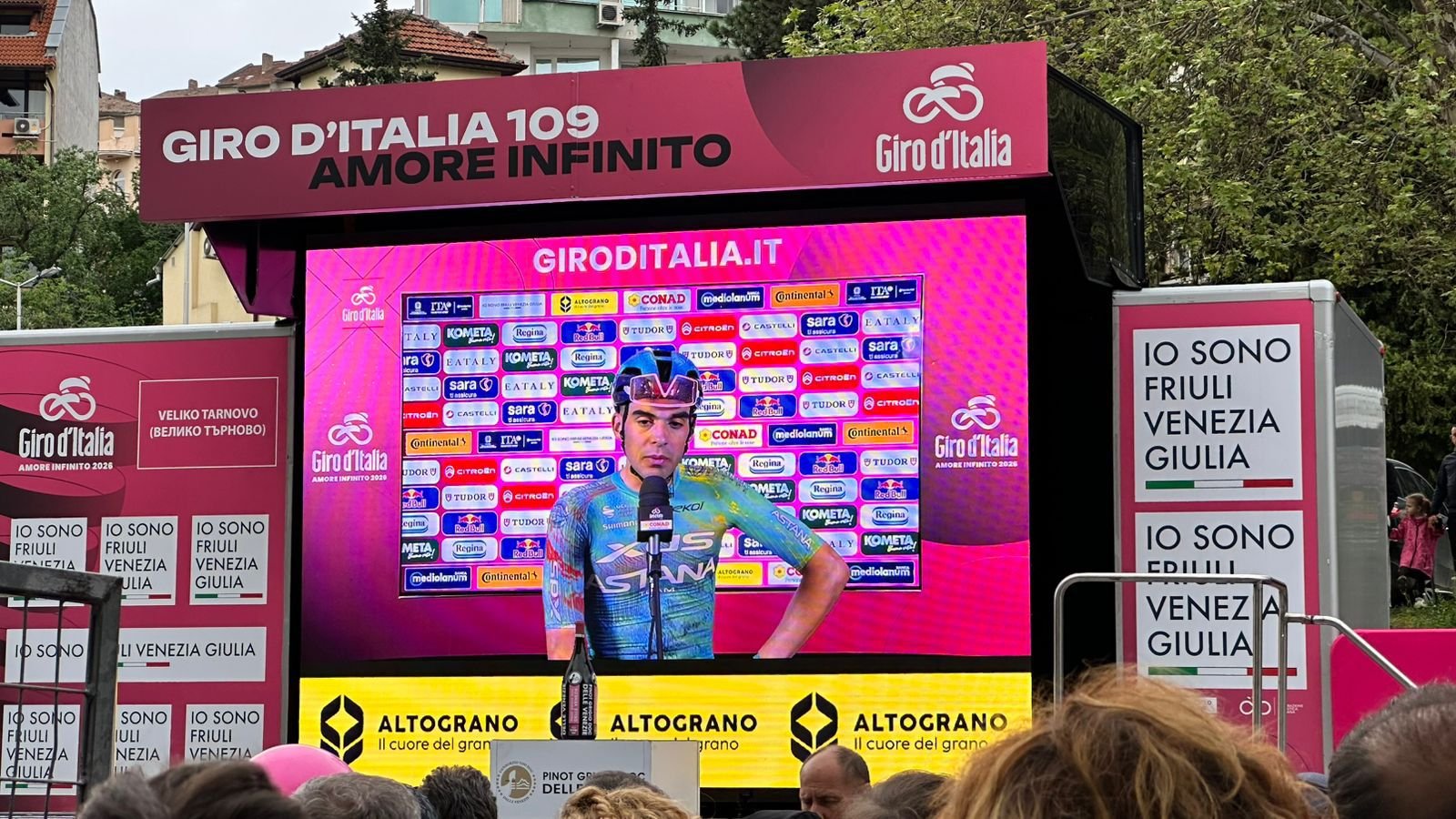
For one day, Veliko Tarnovo was not only the old capital of Bulgaria. It became a stage of one of the most iconic cycling races in the world.
On 9 May 2026, the second stage of the Giro d’Italia brought the riders from Burgas to Veliko Tarnovo — a long and demanding 221 km route across Bulgaria, with climbs, rain, attacks, crashes and a dramatic finish in the heart of the city.
But beyond the result, the day carried something bigger: the feeling that a global sporting event had entered the streets, hills and rhythm of the old capital.
A global race in a Bulgarian landscape
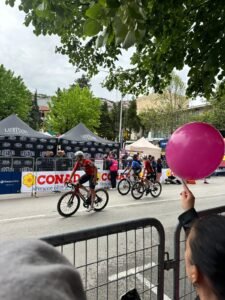 The Giro d’Italia is usually associated with the Italian Alps, historic towns, pink jerseys and legendary climbs. In 2026, however, the race opened in Bulgaria as part of the Grande Partenza — the international start of the Giro.
That made the Bulgarian stages more than a sporting route. They became a moving postcard: the Black Sea coast, the valleys of the Balkans, the mountain roads and finally the dramatic approach to Veliko Tarnovo.
The second stage was never going to be easy. After leaving Burgas, the route gradually became more difficult, especially after Sliven, before the riders approached Veliko Tarnovo through Lyaskovets. One of the key points came close to the end — the Lyaskovets Monastery Pass, a climb placed only around 11 km before the finish.
From there, the race descended toward Veliko Tarnovo, where the final kilometres turned the old city into a cycling arena.
Veliko Tarnovo as a natural stage
Some cities need decoration to become spectacular. Veliko Tarnovo does not.
With its hills, old houses, river curves, narrow urban perspectives and historic atmosphere, the city already looks like a natural amphitheatre. When the Giro arrived, that landscape became part of the race itself.
The riders entered the city after descending from the area of the Petropavlovski Monastery and Sheremetya, before reaching Veliko Tarnovo from the eastern side. For local people, this was not just a television image. It was a rare moment when their own streets became part of the international cycling map.
The pink colour of the Giro — visible in banners, signs and the famous maglia rosa — stood out against the dark roads, spring sky and old urban textures of the city. For E-volution Media, this is exactly the kind of moment worth capturing: sport not only as competition, but as culture, movement and shared public energy.
A dramatic finish and a historic winner
The stage ended with a surprise.
Guillermo Thomas Silva of XDS Astana won the sprint in Veliko Tarnovo, ahead of Florian Stork and Giulio Ciccone. His victory was historic: Silva became the first Uruguayan rider to win a stage of the Giro d’Italia.
The final part of the race had everything: attacks, tension and a late regrouping before the sprint. Jonas Vingegaard, Giulio Pellizzari and Lennert Van Eetvelt tried to break away on the Lyaskovets Monastery Pass, but their move was caught before the finish.
In the end, Veliko Tarnovo did not simply host a stage. It witnessed a piece of cycling history.
More than sport
What makes events like this important is not only the professional race itself. It is the way a city changes for a few hours.
Roads become routes. Spectators become part of the scene. Local places are seen by people far beyond the region. Young people, families, cycling fans, photographers and curious passers-by suddenly share the same urban moment.
For a media platform like E-volution Media, this is where the story becomes interesting. The Giro in Veliko Tarnovo was not only about speed and rankings. It was about how a global event can temporarily transform a city into a meeting point between sport, tourism, culture and visual storytelling.
It also showed another side of Bulgaria — not only as a destination, but as a landscape capable of hosting major international events with character and atmosphere.
A pink trace through the city
When the riders leave, the race continues elsewhere. The barriers disappear, the streets return to normal and the city moves on.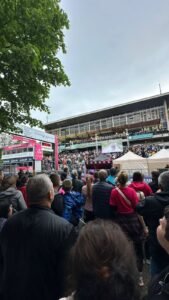
But something remains.
A few images. A shared memory. A different view of familiar streets. The feeling that Veliko Tarnovo, even for one day, was part of a much larger road.
And maybe this is the real beauty of cycling: it does not stay in stadiums. It passes through places. It connects landscapes. It brings movement into the everyday life of cities.
On 9 May 2026, the Giro d’Italia passed through Veliko Tarnovo — and left behind a bright pink trace in the story of the old capital.